Performance analysis software has made software the analyst’s job
· VectorPitch Team
Performance analysis software has not simply helped analysts do their work. It has shaped what the work is. For more than a decade, many tools have centred the analyst’s day on capturing footage, tagging events, building clips and preparing outputs. The industry has adapted around those interfaces, until operating the software is too often mistaken for doing performance analysis.
That design choice has a cost. Analysts work around complex code windows, dense hotkey setups and templates that demand practice before they can be used quickly. Fluency with a particular interface can look like analytical ability; strong judgement can be overlooked when someone is slower with that system. That is a failure of the tool, and a failure the profession should stop accepting.
Software has defined the workflow
Platforms such as Hudl Sportscode and Nacsport have been part of performance analysis for more than a decade. Their product has become the work. Analysts have had to adapt to the software, learning complex code windows and setups to get through the work. The software has constructed a role centred on tagging, and the industry has organised itself around that role.
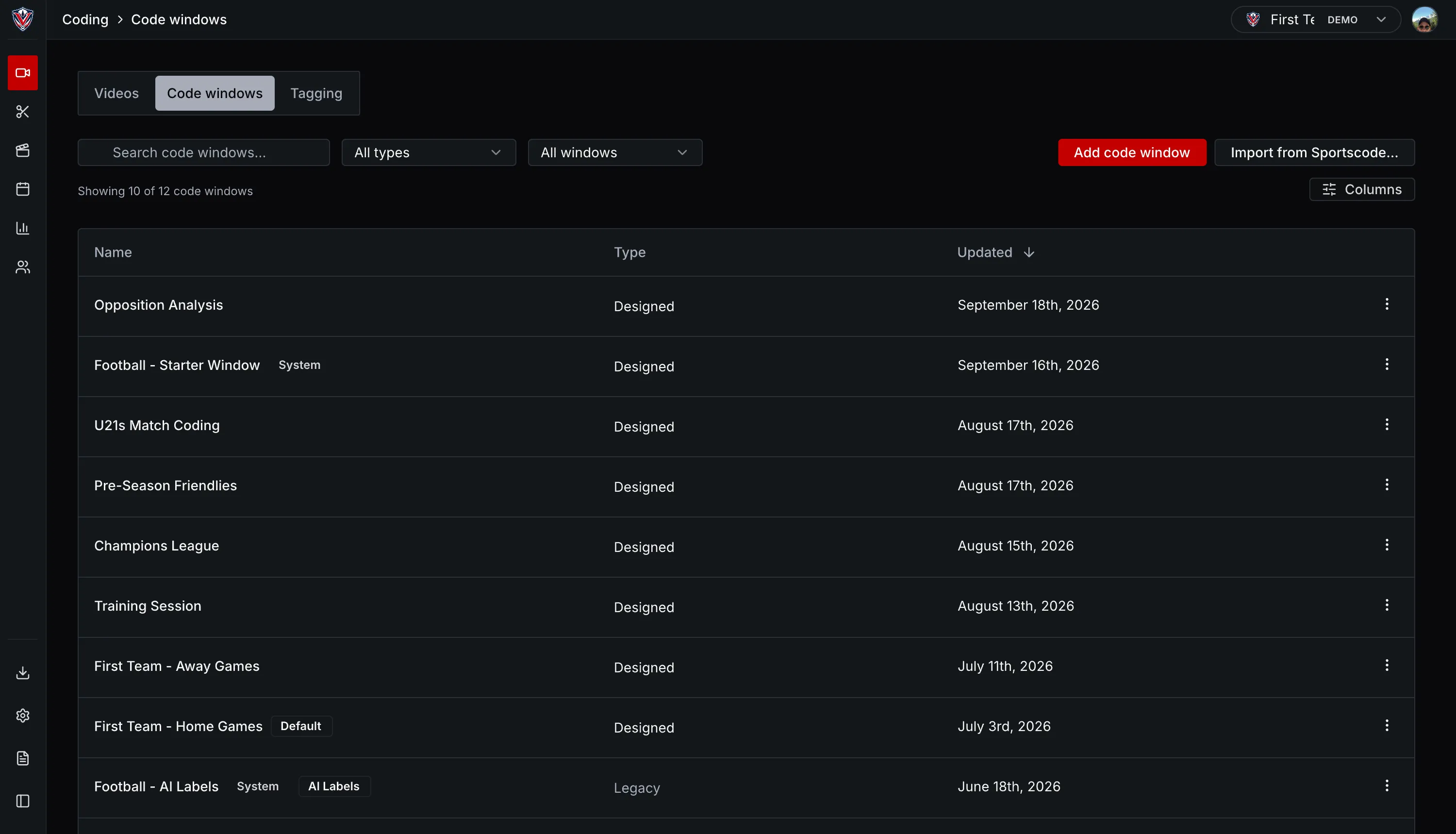
The research reflects how established this pattern is. A 2026 survey of 38 performance analysts in professional and semi-professional football found that manual video capture and notational analysis remained prevalent despite advances in technology. Interviews with 20 analysts working in elite sport mapped a spectrum from data entry to analysis and examined how technology shaped their working conditions. These studies do not prove that any one product created the pattern. They do show that manual data work remains normal, and that technology shapes the conditions in which analysts work.
Technical fluency is not analytical quality
Complex code windows and elaborate hotkey or template setups are often treated as signs of expertise. They are not. They are evidence that analysts have learned to work around the assumptions built into a tool. A system that requires a user to master a stressful, intricate setup before they can analyse a match has put the burden in the wrong place.
Analytical skill is the ability to ask the right question, test what the footage supports and explain what a pattern means. Tagging is a means to that work. When the interface makes tagging the main event, analysts are left with less time for interpretation and the profession rewards speed inside the system over the quality of the thinking.
The distinction matters across the profession, but it is especially costly for small departments and solo analysts, who cannot hand tagging off to someone else. If each platform demands its own complex workflow, teams end up comparing analysts by how well they operate software. That narrows the talent pool and wastes the judgement teams hired analysts to bring.
Build tools around analysis
At VectorPitch, we believe analysis software should adapt to the analyst’s work, not force the analyst to adapt to the software. The job should not begin and end in a code window. Tools should help analysts move from footage to relevant moments, from moments to patterns, and from patterns to clear communication. Automation can take on repetitive first-pass work; the analyst must remain responsible for checking the evidence and deciding what it means.
Coding matters. It is a method for collecting evidence, not the purpose of the profession. Software should make accurate capture straightforward, then help analysts find, examine and communicate what matters. If a tool makes data entry the centre of the job, it is shaping the role badly.
The standard for better software is clear: does it give analysts more time and a better way to think about performance, test an idea and communicate a decision? A faster tagging workflow is not enough. The next generation of tools must stop making analysts serve the software and start giving them room to do the work only an analyst can do.